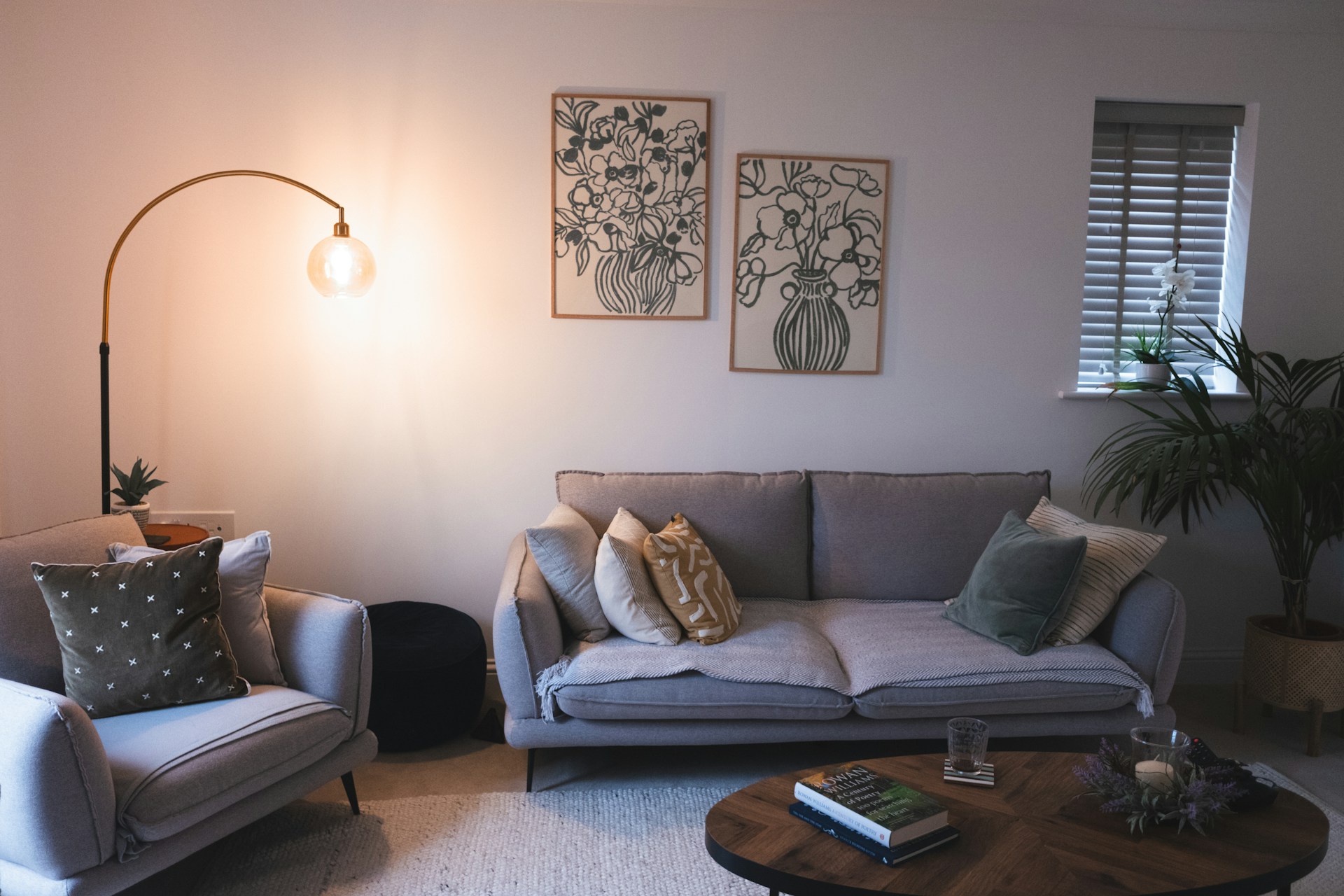
💡 The Secret Ingredient: Harnessing the Transformative Power of Home Lighting
I. Introduction: The Often-Forgotten Element of Great Design
You've chosen the perfect paint color, the ideal sofa, and the latest smart thermostat. But if your lighting is an afterthought—a single, harsh overhead fixture—your entire design vision will fall flat. **Home lighting design** is arguably the most powerful tool an interior designer has. It can make a small room feel expansive, a cold room feel cozy, and a cheap piece of art look like a gallery masterpiece.
This in-depth guide will teach you the professional technique of **layering light** to create depth, dimension, and mood in every room of your home. Stop simply illuminating a room, and start curating an **interior design** experience.
II. Understanding the Three Essential Layers of Light
Professional designers categorize lighting into three distinct, non-negotiable layers. Successful design uses all three to avoid flat, one-dimensional spaces.
A. Layer 1: Ambient Lighting (The Foundation)
This is the general, background light that provides a uniform level of illumination necessary for overall visibility and safe navigation. It is the first layer, but rarely the star.
- Purpose: Safety, orientation, and overall background visibility.
- Examples: Recessed lights (pot lights), ceiling-mounted fixtures, chandeliers.
- Pro Tip: Ambient light should almost always be on dimmers. When the other layers are engaged, the ambient light should be subdued to allow them to define the space.
B. Layer 2: Task Lighting (The Function)
Task lighting is focused, bright light used to help you perform specific activities safely and comfortably. It must be free of glare and placed strategically to minimize shadows.
- Purpose: Reading, cooking, working, applying makeup, hobbies, and detail work.
- Examples: Under-cabinet lighting in the kitchen, desk lamps, floor lamps dedicated to a reading chair, pendant lights over an island.
- Focus: Functionality. This light should be brighter and often cooler (more neutral white) than ambient or accent light.
C. Layer 3: Accent Lighting (The Drama)
This is the artistic layer, used to draw attention to features, textures, or objects. It is the final touch that adds the "wow" factor and creates visual hierarchy in a room.
- Purpose: Highlighting artwork, architectural features (like stone walls or archways), bookcases, or unique sculptures.
- Examples: Track lighting, picture lights mounted above a canvas, focused spotlights, and discreet uplights behind indoor plants.
- Focus: Creating focal points. Accent lighting should generally be three times brighter than the ambient light to make the feature truly pop.
III. Light Temperature: The Impact of Color on Mood
It’s not just about brightness; it’s about color. Light temperature, measured in Kelvin (K), dictates the emotional tone of a space. Choosing the wrong temperature can make an otherwise beautiful room feel cold or institutional.
| Temperature Range (K) | Name | Effect on Mood | Ideal Placement |
|---|---|---|---|
| **2,000K – 3,000K** | Warm White | Cozy, relaxed, intimate. Mimics candlelight or firelight. | Living Rooms, Bedrooms, Dining Rooms. |
| **3,100K – 4,500K** | Neutral White | Crisp, focused, modern. Balanced for detail work. | Kitchens (Task Areas), Bathrooms, Home Offices. |
| **4,600K – 6,500K** | Daylight/Cool White | Stimulating, very bright. Can feel stark or clinical. | Garages, utility rooms, or specific art studios. Best used sparingly in living spaces. |
V. Room-by-Room Application: Designing for Intent
Every room has a different primary function, meaning its **home lighting design** needs a tailored approach.
A. The Living Room: Focusing on Ambiance
The goal here is flexibility. You need bright light for board games, but soft, layered light for movie night. Use floor and table lamps (task/accent) to complement a dimmable central ambient source. **Never rely on just the overhead fixture.**
B. The Kitchen: Prioritizing Task
The kitchen requires high-quality, bright, and often neutral light (3500K-4000K) over work surfaces. **Under-cabinet lighting** is non-negotiable for task purposes, as it eliminates shadows cast by overhead lights while chopping.
C. The Bedroom: Embracing Relaxation
Keep light sources low and warm (2700K). Bedside lamps should be functional for reading (task), but the main ambient light should be soft and on a dimmer. Avoid high-intensity, central ceiling lights.
VI. Conclusion: Illuminating Your Best Home Life
By mastering the principle of **layering light** and understanding the impact of temperature, you gain control over the mood, usability, and perception of space in your home. Lighting is the key to depth, dimension, and comfort—it transforms four walls into a sanctuary. Stop letting random shadows dictate your design and start using intentional **home lighting design** to illuminate your life and showcase your style.